


India’s scientific future will not be built only in laboratories. It will be built in the sky. Serendipity Space, founded by Dr Shweta Raghuram, is creating a new frontier for Indian research by sending pharmaceutical and materials science experiments to near space. Their work is bold, precise and deeply Indian. It proves that India can lead in microgravity research with its own talent and its own imagination.
Serendipity Space shows how India’s scientific strength grows when curiosity becomes courage.
Purpose and Mission
Serendipity Space exists to make near space research accessible. India faces a specific problem. Many scientific breakthroughs in pharmaceuticals and materials science depend on microgravity studies. These studies are usually done by large space agencies. They are expensive. They are slow. They are inaccessible to most Indian researchers.
Serendipity Space solves this gap by using high altitude balloon platforms to carry experiments to near space. These platforms reach altitudes where microgravity like conditions exist. They allow Indian scientists to test drug crystallisation, protein behaviour and advanced materials in extreme environments.
Their mission is simple. To democratise microgravity research. To give Indian scientists access to frontier environments. To build India’s capability in space enabled science.
Journey and Pivotal Moment
Serendipity Space began with a question. Why should microgravity research be limited to large agencies. Dr Shweta Raghuram saw how global pharmaceutical companies used space conditions to improve drug purity and stability. She realised India needed similar capability. She believed India could build it.
The journey took years. It required engineering. It required scientific design. It required regulatory approvals. It required collaboration with research institutions. The pivotal moment came when Serendipity Space successfully launched its first near space experiment. The balloon rose. The payload stabilised. The data returned. The experiment worked.
That moment changed everything. It proved that India could build near space research platforms. It proved that Indian scientists could access frontier environments without waiting for foreign missions. It proved that microgravity research could be Indian.
Beneficiaries and Measurable Impact
Serendipity Space benefits pharmaceutical researchers. It benefits materials scientists. It benefits universities. It benefits biotech startups. It benefits national laboratories.
The impact is visible. Their platforms have carried experiments that study drug crystallisation. They have carried materials that respond differently in low pressure and low gravity. They have generated data that helps scientists understand purity, stability and structural behaviour.
Their work saves time. It saves cost. It saves dependency on foreign agencies. It gives Indian researchers access to environments that were previously unreachable.
Serendipity Space strengthens India’s scientific confidence. It strengthens India’s research capability. It strengthens India’s position in global frontier science.
Indian Challenges and Systemic Gaps
India faces unique challenges in frontier research. Access to microgravity is limited. Space missions are expensive. Research slots are scarce. Many Indian scientists cannot test their theories in extreme environments. Many universities lack infrastructure for advanced experimentation.
Serendipity Space responds to these gaps with innovation. It builds balloon platforms that reach near space. It designs payloads that carry scientific experiments. It creates conditions that mimic microgravity. It provides access at a fraction of the cost of orbital missions.
India needed a company that understood both science and engineering. Serendipity Space became that company.
Innovation and Approach
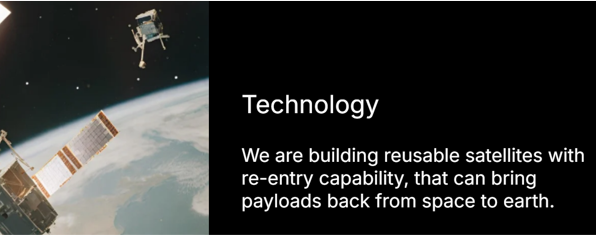
Serendipity Space’s innovation lies in its approach to near space research. It uses high altitude balloons to reach altitudes between 20 and 30 kilometres. At these heights, gravity is reduced. Pressure is low. Temperature is extreme. Radiation levels are high. These conditions allow scientists to test how drugs and materials behave in environments similar to space.
Their approach is rooted in precision. They design payloads carefully. They monitor conditions continuously. They collect data rigorously. They ensure experiments return safely.
Their spokesperson message reflects their philosophy. “Science should not wait for space missions.”
This guides their engineering.
People Behind the Mission
Serendipity Space is led by Dr Shweta Raghuram. She brings expertise in pharmaceutical science. She brings experience in research. She brings understanding of how microgravity affects drug behaviour. She leads a team of engineers, scientists and designers.
Their team includes aerospace engineers who design balloon platforms. It includes materials scientists who understand extreme environments. It includes data analysts who interpret results. It includes technicians who build payloads.
Their strength lies in interdisciplinary collaboration. They combine science with engineering. They combine curiosity with precision. They combine ambition with discipline.
Obstacles and Lessons
Serendipity Space faced many obstacles. It had to design stable balloon platforms. It had to ensure safe payload recovery. It had to meet regulatory norms. It had to convince researchers to trust near space conditions. It had to build credibility in a field dominated by large agencies.
It overcame these challenges through results. It launched successful missions. It returned usable data. It built partnerships with research institutions. It refined its technology. It proved reliability.
The lesson is clear. Frontier science grows when innovation meets persistence.
Strengthening India’s Long Term Capability
Serendipity Space strengthens India’s future by building indigenous microgravity research capability. It reduces dependency on foreign missions. It increases access for Indian scientists. It accelerates pharmaceutical innovation. It supports materials science breakthroughs.
Its work strengthens India’s scientific ecosystem. It strengthens university research. It strengthens biotech startups. It strengthens national laboratories.
Serendipity Space builds resilience by ensuring that India’s scientific future is not limited by access.
Future Vision for India
Serendipity Space envisions an India where microgravity research is common. It wants Indian universities to run near space experiments regularly. It wants pharmaceutical companies to test drug crystallisation in extreme environments. It wants materials scientists to explore new structures. It wants India to lead in space enabled science.
It plans to expand its platforms. It plans to build more payload capabilities. It plans to collaborate with more institutions. It plans to strengthen India’s position in global research.
Its dream is simple. An India that explores science beyond the ground.
Insight for Readers
The biggest insight from Serendipity Space’s journey is that frontier science does not need rockets. It needs imagination. Their story shows that India’s future will be shaped by innovators who build access where none existed. It shows that science is strength. It shows that curiosity is progress.
Action That Will Help India Progress
India should launch a National Near Space Research Program. This initiative can support balloon based experiments. It can fund university research. It can modernise pharmaceutical R and D. It can encourage materials science innovation. It can make frontier research accessible to Indian scientists.
India will be stronger when microgravity becomes a national capability.