

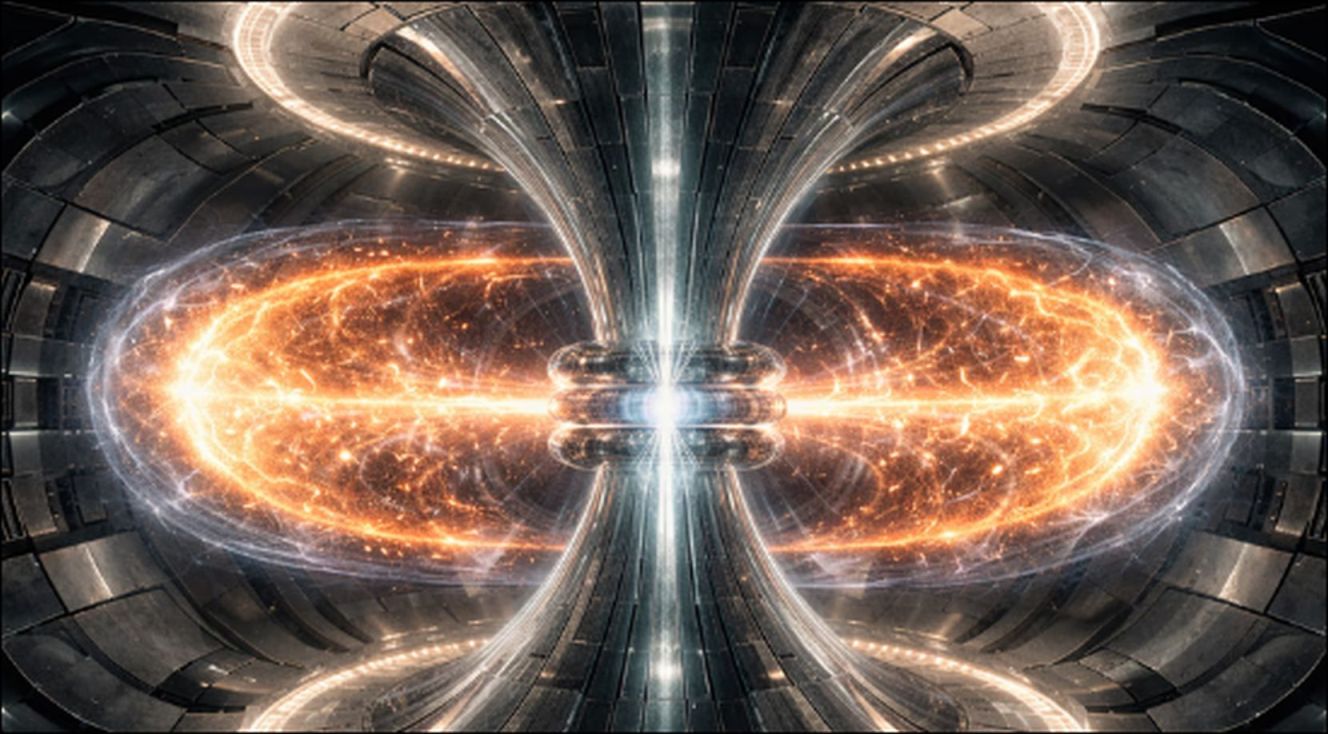
India’s energy story is entering a new age. In Bengaluru, a young deep tech company is attempting something that once felt impossible. Pranos Fusion is building India’s first privately developed compact tokamak. Their machine, named Pragya, is a symbol of courage. It shows that India can step into the global fusion race with its own science and its own belief. Pranos is proving that India’s future energy breakthroughs will come not only from national laboratories but also from innovators who dare to build the impossible.
Pranos shows how India’s scientific strength grows when ambition becomes hardware.
Purpose and Mission
Pranos Fusion exists to build fusion technology for India. India faces a specific problem. Clean energy demand is rising. Fossil fuels strain the environment. Renewable sources are intermittent. Fusion offers limitless clean energy, but fusion hardware is dominated by large global labs. Private participation in India was almost nonexistent.
Pranos addresses this gap by building a compact tokamak that can test plasma behaviour. Pragya is designed as a research platform. It will help India understand plasma control, superconducting magnets and reactor engineering. It will support future fusion reactors. It will strengthen India’s scientific capability.
Their mission is simple. To build India’s fusion backbone. To create hardware that trains scientists. To make fusion research accessible to Indian talent.
Journey and Pivotal Moment
Pranos began in 2024. The founders, Shaurya Kaushal and Roshan George, started with a two room lab at JNCASR in Bengaluru. They had limited resources. They had no roadmap. They had only belief. They built software to compute tokamak configurations. They built early prototypes. They refined designs. They worked with computational models.
The pivotal moment came when they built Pragya. It took eight months. It was conceived, funded and built entirely by a private Indian company. It was compact. It was precise. It was ready for plasma. This changed everything. India now had a private tokamak. India had a new path to fusion. India had a new scientific milestone.
Pragya produced plasma in 2026. This marked India’s entry into private fusion experimentation. It proved that the machine could operate as a research platform. It proved that Pranos had crossed the hardest barrier.
Beneficiaries and Measurable Impact
Pranos benefits India’s scientific ecosystem. It benefits plasma researchers. It benefits universities. It benefits national laboratories. It benefits future energy companies.
The impact is visible. Pragya is India’s first privately developed compact tokamak. It is designed to operate for nearly two decades. It can run ten to twelve experimental shots a day. It can generate around three thousand shots annually. This creates massive data. This trains scientists. This accelerates research.
Pranos built the machine in eight months. It raised sixty three crore rupees in funding. It built hardware that India once believed only national labs could build. It created a platform that will support future reactors.
Pranos strengthens India’s scientific confidence. It strengthens India’s energy research capability. It strengthens India’s position in global fusion science.
Indian Challenges and Systemic Gaps
India faces unique challenges in fusion. Fusion hardware is expensive. Plasma research requires specialised machines. National labs have long timelines. Private participation was limited. Many Indian scientists lacked access to experimental reactors.
Pranos responds to these gaps with innovation. It builds compact tokamaks. It uses low aspect ratio designs. It reduces cost. It accelerates timelines. It creates platforms that can be used by Indian researchers. It builds hardware that supports national goals.
India needed a private company that understood both plasma science and engineering. Pranos became that company.
Innovation and Approach
Pranos’s innovation lies in its compact tokamak design. Pragya has a major radius of around forty centimetres. It has a minor radius above eighteen centimetres. It has an aspect ratio of around two point two. It uses magnetic fields to confine plasma. It is the smallest tokamak built in India.
Its approach is rooted in experimentation. Pragya is not designed to generate commercial power. It is designed to test plasma control. It is designed to test superconducting magnets. It is designed to test diagnostics. It is designed to support future reactors.
Pranos’s spokesperson message reflects its philosophy. “We are building the foundation for India’s fusion future.”
This guides their engineering.
People Behind the Mission
Pranos is led by founders who believe in Indian fusion. Shaurya Kaushal holds a PhD in computational physics from JNCASR. He worked with the UK Atomic Energy Authority. He worked with CSIR CEERI. He brings scientific depth.
Roshan George is a computer scientist. He leads software and control algorithms. He builds systems that manage plasma behaviour. He brings engineering precision.
Their team includes twelve scientists and engineers. They include computational physicists. They include plasma researchers. They include hardware designers. They include technicians who build and test the machine.
Their strength lies in interdisciplinary collaboration.
Obstacles and Lessons
Pranos faced many obstacles. It had to build hardware with limited resources. It had to earn credibility in a field dominated by national labs. It had to design a tokamak from scratch. It had to manage plasma stability. It had to meet safety norms. It had to raise funds.
It overcame these challenges through persistence. It built Pragya. It produced plasma. It earned recognition. It raised funding. It built a machine that stands as a symbol of Indian capability.
The lesson is clear. Fusion grows when courage meets engineering.
Strengthening India’s Long Term Capability
Pranos strengthens India’s future by building indigenous fusion hardware. It reduces dependency on foreign labs. It increases access for Indian scientists. It accelerates plasma research. It supports national energy goals.
Its machine strengthens India’s scientific ecosystem. It strengthens university research. It strengthens national laboratories. It strengthens India’s position in global fusion science.
Pranos builds resilience by ensuring that India’s fusion future is Indian.
Future Vision for India

Pranos envisions an India where fusion research is common. It wants Indian universities to use compact tokamaks. It wants Indian scientists to test plasma control. It wants India to build full scale reactors. It wants India to lead in fusion energy.
It plans to build Praniq, a full scale reactor by 2030. It plans to expand research. It plans to collaborate with national labs. It plans to strengthen India’s energy future.
Its dream is simple. An India that builds the energy of the future.
Insight for Readers
The biggest insight from Pranos’s journey is that fusion does not need giant labs. It needs imagination. Their story shows that India’s future will be shaped by innovators who build quietly and fearlessly. It shows that science is strength. It shows that courage is progress.
Action That Will Help India Progress
India should launch a National Fusion Research Program. This initiative can support compact tokamaks. It can fund plasma research. It can train scientists. It can modernise laboratories. It can accelerate India’s fusion capability.
India will be stronger when fusion becomes a national priority.
Organisation Website