

India’s space story has always been written by courage. Astrophel Aerospace is adding a new chapter to that story. This Pune based deep tech company is building propulsion hardware that India once believed only large agencies could create. Their cryogenic pumps, semi cryogenic engines and reusable propulsion systems show that Indian engineering can match global standards with its own hands and its own imagination. Astrophel is proving that India’s future in space will be shaped not only by national missions but also by innovators who build quietly, precisely and fearlessly.
Astrophel shows how India’s capability grows when ambition becomes engineering.
Purpose and Mission
Astrophel’s purpose is clear. It wants to make rocket propulsion affordable, accessible and Indian. India faces a specific problem. Launch vehicles are expensive. Propulsion hardware is imported. Cryogenic systems are complex. Many private companies struggle to build engines because costs are high and testing access is limited.
Astrophel addresses this gap by building propulsion hardware in house. It develops semi cryogenic engines. It develops cryogenic pumps. It develops valves. It develops subsystems that reduce cost and improve reliability. It builds engines that can be reused. It builds components that can be commercialised across industries.
Its mission is simple. To make India a global leader in propulsion. To build engines that are Indian. To create technology that strengthens India’s space future.
Journey and Pivotal Moment
Astrophel began unofficially in 2021. The founders, Immanuel Louis and Suyash Bafna, met through a shared passion for propulsion. Suyash printed rocket injectors at home during the pandemic. He tested them. He refined them. He sent one design to Dr S Somnath, then Chairman of ISRO. Somnath replied. He called the work impressive. That message changed everything.
The journey took years. It required bootstrapping. It required testing. It required discipline. The pivotal moment came in August 2023 when Astrophel independently developed and test fired a semi cryogenic engine named Potentia. They did it without external funding. They proved that Indian engineers could build serious propulsion hardware with limited resources.
That moment shaped their direction. They decided to build reusable engines. They decided to build cryogenic pumps. They decided to build valves that could replace imports. They decided to build India’s propulsion backbone.
Beneficiaries and Measurable Impact
Astrophel’s work benefits India’s space ecosystem. It benefits private launch companies. It benefits ISRO. It benefits defence platforms. It benefits industries that use cryogenic systems.
The impact is visible. Astrophel built India’s first startup developed cryogenic pump. It operates at 25,000 RPM. It is undergoing validation with ISRO. It is a stepping stone toward a turbopump. A turbopump is the heart of an orbital engine.
Astrophel’s valves operate at pressures above 150 bar. They achieve 0.1 mm precision. They are cheaper than imports. They have early interest from ISRO. They can be used in oil and gas, medical and energy sectors.
Astrophel’s semi cryogenic engine was test fired without external funding. This reduced cost dramatically. Their engines have been tested for as little as six lakh rupees. This is unheard of in global propulsion.
Astrophel’s work strengthens India’s propulsion capability. It strengthens India’s manufacturing base. It strengthens India’s strategic autonomy.
Indian Challenges and Systemic Gaps
India faces unique challenges in propulsion. Cryogenic hardware is expensive. Turbopumps are complex. Testing access is limited. Many components are imported. Many startups struggle to scale because hardware requires capital.
Astrophel responds to these gaps with innovation. It builds subsystems first. It commercialises valves. It commercialises pumps. It generates revenue before building full launch vehicles. It uses automotive manufacturing techniques to reduce cost by up to 40 percent. It uses 3D printing to accelerate production.
India needed a propulsion company that understood both engineering and constraints. Astrophel became that company.
Innovation and Approach
Astrophel’s innovation lies in its approach to propulsion. It focuses on components. It builds pumps. It builds valves. It builds engines. It builds subsystems that can be certified and sold.
Its approach is rooted in reusability. It is developing the Astra C1 series. These engines prioritise cost efficiency. They use 3D printing. They use automotive techniques. They reduce production time. They reduce cost.
Astrophel is building India’s first privately developed reusable launch vehicle hopper. It will be tested on 15 August 2026. This test will mark a milestone in India’s private space sector.
Their spokesperson message reflects their philosophy. “We are trying to revolutionise aerospace in the way automakers once revolutionised cars.”
This guides their engineering.
People Behind the Mission
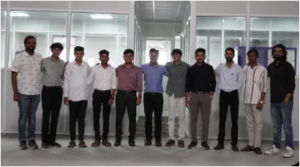
Astrophel is led by founders who believe in Indian propulsion. Immanuel Louis brings aerospace engineering expertise. Suyash Bafna brings electronics and communication engineering expertise. He brings passion for propulsion. He built injectors at home. He tested them. He refined them.
Their advisory board includes propulsion veterans from ISRO, HAL and DRDO. They bring decades of experience. They bring strategic oversight. They strengthen Astrophel’s roadmap.
Their team includes engineers who build pumps. It includes designers who build valves. It includes technicians who test engines. It includes analysts who refine performance.
Their strength lies in discipline and belief.
Obstacles and Lessons
Astrophel faced many obstacles. It had to build hardware without funding. It had to test engines with limited resources. It had to convince investors that propulsion can be capital efficient. It had to earn access to ISRO facilities. It had to prove reliability.
It overcame these challenges through persistence. It built pumps. It built valves. It built engines. It earned an MoU with IN SPACe for testing support. It earned interest from ISRO. It earned recognition at the BRICS Summit.
The lesson is clear. Propulsion grows when innovation meets courage.
Strengthening India’s Long Term Capability
Astrophel strengthens India’s future by building indigenous propulsion hardware. It reduces import dependency. It improves reliability. It supports private launch companies. It supports defence platforms. It supports industrial cryogenic systems.
Its pumps strengthen India’s engine capability. Its valves strengthen India’s manufacturing. Its engines strengthen India’s launch ecosystem. Its reusability roadmap strengthens India’s competitiveness.
Astrophel builds resilience by ensuring India’s propulsion future is Indian.
Future Vision for India
Astrophel envisions an India where propulsion is accessible. It wants India to lead in reusable engines. It wants India to build turbopumps. It wants India to export cryogenic hardware. It wants India to build affordable launch vehicles.
It plans to scale its Astra series. It plans to commercialise more subsystems. It plans to collaborate with global agencies. It plans to strengthen India’s position in space propulsion.
Its dream is simple. An India that builds engines the world respects.
Insight for Readers
The biggest insight from Astrophel’s journey is that propulsion does not need millions. It needs imagination. Their story shows that India’s future will be shaped by engineers who build quietly and fearlessly. It shows that hardware is strength. It shows that precision is progress.
Action That Will Help India Progress
India should launch a National Propulsion Innovation Program. This initiative can support cryogenic hardware. It can support reusable engines. It can support component certification. It can support testing access. It can strengthen India’s private space sector.
India will be stronger when propulsion becomes a national priority.