

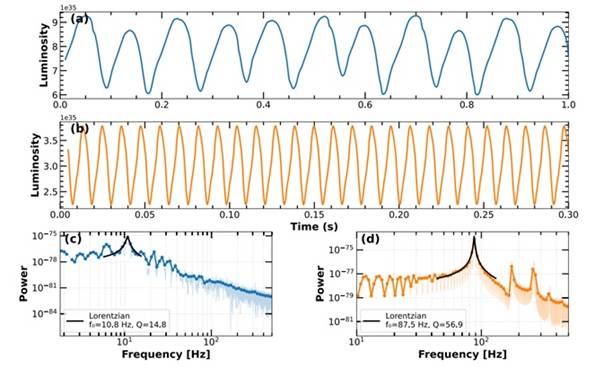
Astronomers are gaining new insights into the mysterious flickering of light emitted by matter surrounding black holes, with research highlighting the role that black hole spin may play in shaping these rapid changes in brightness.
Black holes are surrounded by extremely hot, rapidly moving matter that can emit intense radiation. The light from this material can vary over time, producing characteristic fluctuations or “flickering” that provide valuable information about the extreme physical conditions near the black hole.
The spin of a black hole can influence the motion and environment of nearby matter. As the black hole rotates, it affects the surrounding space and the dynamics of material in its vicinity. Studying how these effects relate to variations in emitted light can help researchers better understand the complex processes taking place close to the black hole.
By examining patterns in the flickering, scientists can investigate the behaviour of matter in the strong-gravity environment around black holes. Such observations and theoretical studies can provide clues about the structure of accretion flows, the movement of hot plasma and the mechanisms responsible for high-energy emissions.
The research adds to the growing understanding of black holes and their extreme environments. Linking the observed variability of light with black hole spin could offer astronomers another way to probe regions that cannot be directly imaged or observed in conventional ways.
The findings underline how seemingly subtle changes in cosmic brightness can carry information about some of the most extreme objects in the Universe, helping scientists explore the physics of matter and gravity under conditions far beyond those found on Earth.