

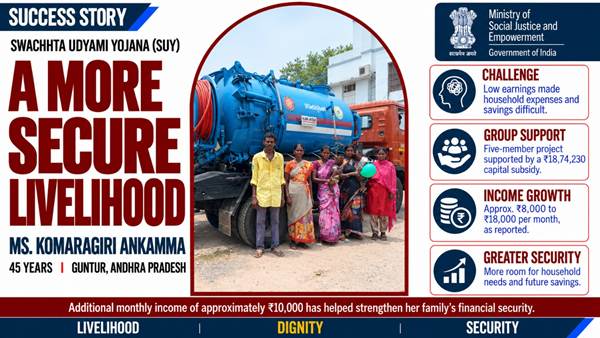
For years, Ms. Komaragiri Ankamma depended on waste picking to support her family and meet everyday expenses. Her journey towards greater financial security reflects how livelihood support, access to welfare measures and opportunities for economic empowerment can help vulnerable individuals build a more stable future.
Working in the informal waste sector often involves irregular income and difficult working conditions. For Ankamma, daily waste collection was an important source of livelihood, but financial uncertainty remained a persistent challenge. With limited resources, planning for household needs and securing a dependable income could be difficult.
Access to appropriate support helped Ankamma gradually move towards improved financial stability. Assistance aimed at strengthening livelihoods and connecting vulnerable workers with available welfare and social-security mechanisms can provide an important foundation for long-term economic resilience.
As her circumstances improved, Ankamma was able to look beyond day-to-day survival and focus on creating greater security for herself and her family. The experience demonstrates how targeted support can help individuals strengthen their livelihoods while encouraging greater independence and confidence.
Her story also highlights the importance of recognising the contribution of informal workers and ensuring that they have pathways towards social protection, financial inclusion and sustainable livelihoods. Such interventions can help transform economic vulnerability into opportunities for greater stability.
Ms. Komaragiri Ankamma’s journey from waste picking towards greater financial security is a reminder that access to livelihood opportunities and supportive social systems can make a meaningful difference in the lives of vulnerable families.