

In a significant advance in solar physics, scientists have observed simultaneous oscillations in solar filaments, shedding new light on the properties and dynamics of these massive structures on the Sun.
Solar filaments—vast, thread-like clouds of cooler plasma suspended above the Sun’s surface—are held in place by complex magnetic fields. Using high-resolution observations, researchers detected synchronized oscillations occurring across different parts of the same filament, a phenomenon that could help decode their internal structure.
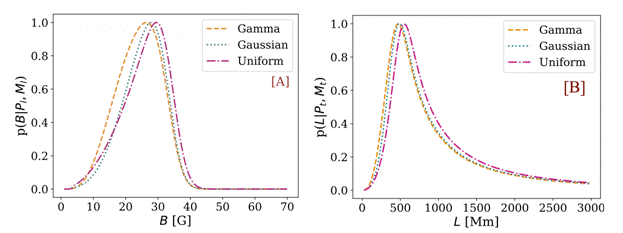
The study reveals that these coordinated movements are likely governed by the Sun’s magnetic field, providing valuable insights into the strength, configuration, and stability of these invisible forces. Understanding such oscillations allows scientists to estimate key physical properties of filaments, including their density and magnetic tension.
Experts say the findings could improve predictions of solar eruptions. Filaments are often associated with solar storms, which can trigger space weather events affecting satellites, communication systems, and power grids on Earth.
By analyzing how these filaments oscillate, researchers aim to better understand the mechanisms that lead to their destabilization and eventual eruption. The discovery also contributes to broader efforts to map the Sun’s magnetic environment and its influence across the solar system.
Scientists plan further observations using advanced solar telescopes to refine their models and deepen understanding of these dynamic solar features, marking another step toward more accurate space weather forecasting.