

Astronomers have uncovered fresh evidence suggesting that even the universe’s smallest galaxies—known as dwarf galaxies—could host black holes, challenging long-held assumptions about where these enigmatic objects can exist.
Dwarf galaxies, which are faint, low-mass systems often orbiting larger galaxies like the Milky Way, were traditionally considered unlikely candidates for housing black holes due to their limited size and matter. However, new research indicates that these galaxies may contain intermediate-mass black holes, bridging the gap between smaller stellar black holes and the supermassive ones found at the centers of large galaxies.
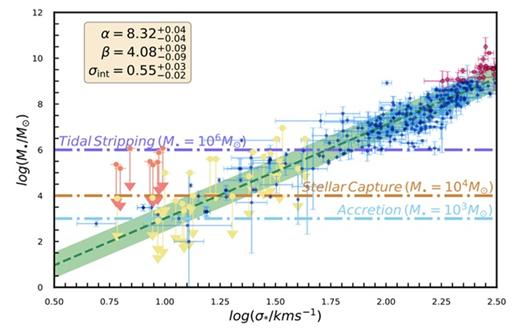
Using advanced modelling techniques and data on stellar movements, scientists examined whether the gravitational influence observed in these galaxies could be explained by the presence of a central black hole. Their findings show that the data is consistent with such a possibility, although direct detection remains challenging due to the galaxies’ dim nature and lack of gas.
The study suggests that these black holes could have masses up to a few million times that of the Sun, significantly smaller than the supermassive black holes found in galaxies like the Andromeda Galaxy, yet large enough to play a key role in galaxy evolution.
Researchers say the discovery is significant because dwarf galaxies are considered “primitive” systems that have undergone minimal changes over cosmic time. As such, they may preserve vital clues about how the first black holes formed in the early universe.
If confirmed, the presence of black holes in dwarf galaxies could point to a more universal relationship between galaxies and black holes, suggesting that these mysterious objects are far more widespread than previously believed.
Scientists plan to use next-generation telescopes and deeper observations to confirm these findings and better understand the role of black holes in shaping galaxies across the universe.