

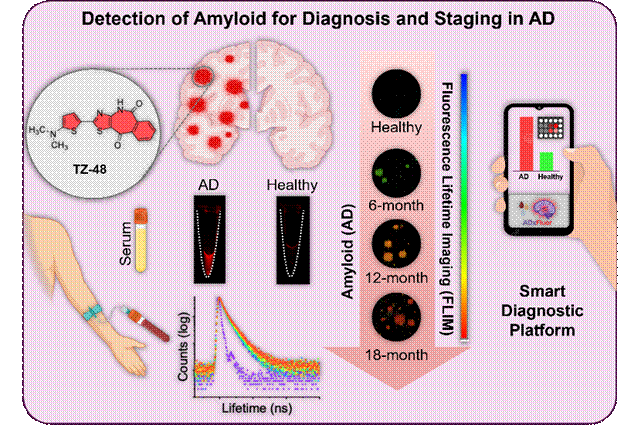
Scientists have developed a novel smartphone-enabled technology that could make the detection of Alzheimer’s disease (AD) simpler, faster and more accessible. The platform uses a fluorescence-responsive molecule called TZ-48 to detect amyloid-β (Aβ), a key biomarker associated with Alzheimer’s disease.
Developed by scientists at the Jawaharlal Nehru Centre for Advanced Scientific Research (JNCASR) under the Department of Science and Technology, the technology uses changes in fluorescence produced when TZ-48 interacts with amyloid-β. These changes can be captured and quantified through a dedicated smartphone application, offering a potentially low-cost and user-friendly approach to AD screening.
Current diagnostic techniques such as PET and MRI can provide valuable information but often require expensive equipment, specialised infrastructure and trained professionals. Blood-based tests for amyloid-β and tau are emerging as alternatives, but can also be costly and technically complex.
The researchers found that TZ-48 can selectively detect amyloid-β fibrils through enhanced fluorescence and distinct fluorescence-lifetime signatures. The probe also demonstrated the ability to label amyloid-β plaques in experimental models and detect the biomarker in biological fluids such as cerebrospinal fluid and blood serum.
To advance practical applications, the team developed ADxFluor, a smartphone-integrated platform designed to quantify fluorescence changes in blood serum. The technology combines biomarker detection with smartphone-based analysis, potentially paving the way for portable and affordable point-of-care screening systems.
The development marks a promising step towards making Alzheimer’s screening more accessible, particularly in settings where conventional diagnostic infrastructure may be limited. Further clinical validation will be important before the technology can be considered for routine medical diagnosis.