

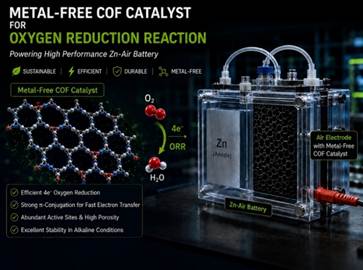
scientists have developed a new metal-free porous material that could pave the way for more affordable and sustainable clean-energy technologies. The material offers promising properties for applications related to energy conversion and storage while reducing dependence on costly or scarce metal-based components.
The development could help address a key challenge in clean-energy technologies: producing efficient materials that are economical, durable and environmentally friendly. Metal-free alternatives may also offer greater flexibility in designing next-generation energy systems.
The porous structure of the newly developed material provides a large surface area and active sites, making it potentially useful for chemical and electrochemical processes involved in clean-energy generation. Researchers believe such materials could contribute to the development of low-cost energy technologies, supporting the transition towards cleaner and more sustainable energy solutions.
The breakthrough highlights the growing role of advanced materials research in addressing global energy challenges and strengthening the foundation for a cleaner, more affordable energy future.