

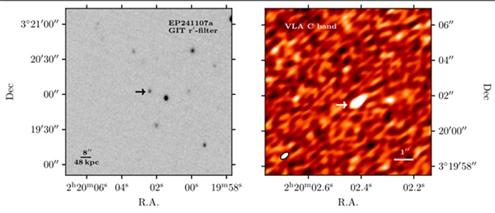
Astronomers have made significant progress in understanding the origin of powerful cosmic X-ray flashes, offering fresh insights into some of the universe's most energetic and short-lived phenomena. The findings provide valuable clues about the extreme environments where these intense bursts of X-ray radiation are produced.
Using observations from advanced space- and ground-based telescopes, researchers found evidence suggesting that these energetic X-ray flashes are linked to highly magnetised compact objects, such as neutron stars or black holes, formed during catastrophic cosmic events. The study helps explain how enormous amounts of energy are released within fractions of a second, producing brilliant flashes detectable across vast distances.
The discovery enhances scientists' understanding of high-energy astrophysical processes and the life cycles of massive stars. It also opens new avenues for studying the behaviour of matter under extreme gravitational and magnetic conditions.
Researchers say continued observations with next-generation telescopes will help unravel the remaining mysteries surrounding these transient cosmic events, improving our understanding of the dynamic and evolving universe.