

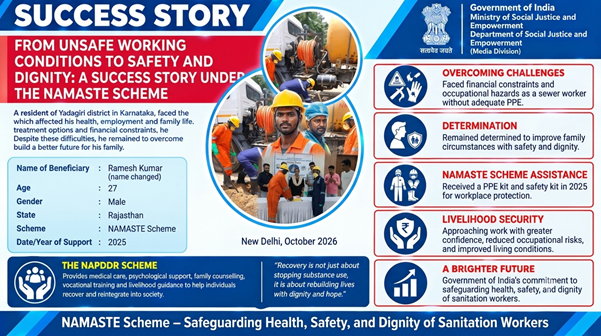
The National Action for Mechanised Sanitation Ecosystem (NAMASTE) Scheme is bringing positive changes to the lives of sanitation workers by promoting safer working conditions, dignity and improved livelihood opportunities. The scheme aims to eliminate hazardous manual cleaning practices and ensure the safety and well-being of workers engaged in sanitation activities.
For many sanitation workers, working in unsafe conditions has long been associated with occupational hazards, health risks and social challenges. Limited access to protective equipment, safety training and appropriate machinery has often exposed them to dangerous situations while carrying out essential sanitation duties.
Through the NAMASTE Scheme, the government is working towards transforming the sanitation ecosystem by promoting mechanisation, providing safety training, distributing personal protective equipment (PPE) and facilitating access to social security benefits.
The initiative also focuses on identifying and profiling sanitation workers, enabling them to access welfare support, skill development opportunities and alternative livelihood options. By encouraging the use of modern equipment and mechanised cleaning methods, the scheme seeks to reduce human exposure to hazardous sanitation work.
The transformation under the NAMASTE Scheme reflects the importance of ensuring that sanitation workers receive not only occupational safety but also respect, recognition and dignity in society.
The initiative represents an important step towards building a safer, more inclusive and dignified sanitation ecosystem, where workers can perform their duties with better protection and improved opportunities for a secure future.