
Ganesh Chaturthi marks the birth of Lord Ganesha, revered as the remover of obstacles and the harbinger of wisdom, prosperity, and new beginnings. The ten-day festival culminates with Ganesh Visarjan.
While Mumbai remains synonymous with grand Ganesh celebrations, Delhi has steadily developed its own vibrant and inclusive tradition that blends devotion, community spirit, and cultural diversity.
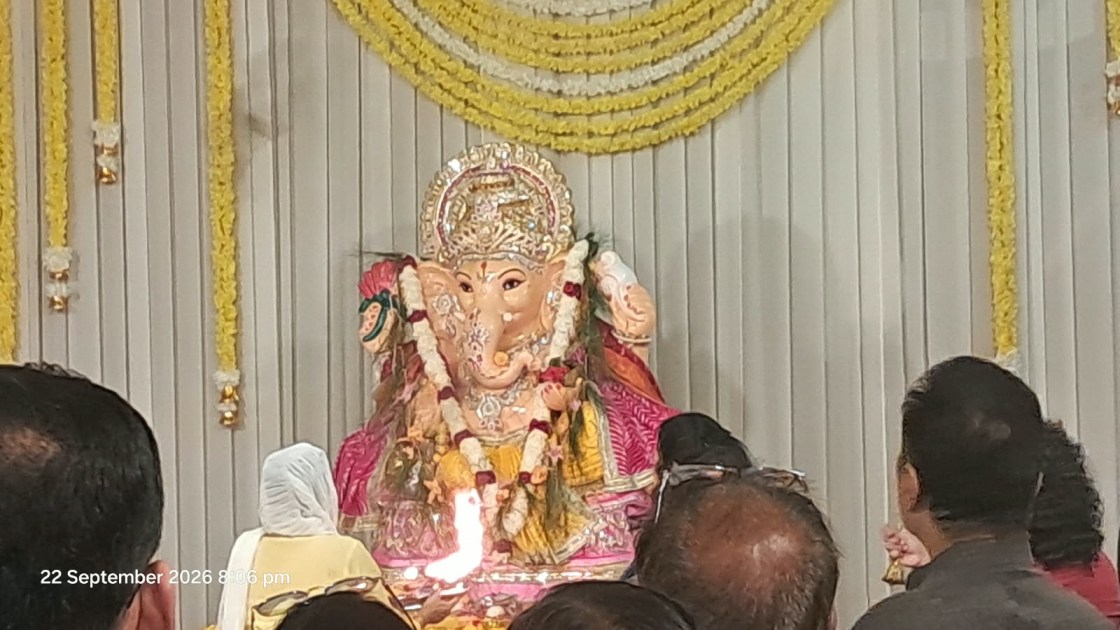
From September 14 to September 24, 2026, Delhi once again welcomed Lord Ganesha through colourful pandals, devotional rituals, cultural programmes, community feasts, and immersion celebrations. Organizers shared a deeply personal sentiment behind the festival’s growth in the capital. Having longed to celebrate in Mumbai but often unable to travel there, they felt that“Bappa came to us.” Another cherished story recalls a young girl telling her mother,“I need a Ganesha at home,” a wish that eventually grew into a larger community celebration.
Over the years, Delhi’s resident welfare associations, temple committees, and community groups have driven the festival’s expansion. The celebrations combine Maharashtrian devotion withDelhi’s distinctive social and cultural flavour. As evening falls, neighbourhoods across Delhi NCR come alive with aartis, devotional singing, flower offerings, and prasad distribution.
Volunteers and organizers shared that many begin their day as early as 5 AM, preparing bhog and breakfast for committee members and devotees, including those who stop by before heading to work. Families gather not only for worship but also for social bonding, making the festival both a spiritual and community experience.
Unlike Maharashtra, where massive public pandals and large immersion processions dominate the celebrations, Delhi’s Ganesh Chaturthi is more localised and personal. Community members often have the opportunity to offer aarti themselves, interact closely with the idol, and seek blessings in an intimate setting.
One of the festival’s defining characteristics in Delhi is its cultural inclusivity. A single pandal may feature Maharashtrian bhajans, Hindi aartis dedicated to Ganesha, Maa Lakshmi, and Lord Narayan (Om Jai Jagdish Hare), as well as Punjabi Gurbani. In CR Park, a predominantly Bengali neighbourhood, one pandal even organiseda“Bhajan Clubbing” event on the eve of immersion.
Organizers emphasised that the pandals welcome everyone: young and old, specially abled individuals, people using wheelchairs, the underprivileged, families seeking birthday or anniversary blessings, and parents bringing newborns for blessings. Some community members noted that these pandals provide safe, stigma-free spaces for people with special needs.
Food further strengthens the sense of belonging. The tradition of serving bhoj or langar transforms the festival into a gathering that welcomes all. While Delhi’s pandals may be more modest than Maharashtra’s famous installations, organizers in Delhi create humble yet attractive spaces. Devotees, however, are drawn less by decoration and more by Bappa’s presence.
Delhi may not match Mumbai’s scale, but it offers something equally meaningful: an intimate, inclusive, and distinctly Delhi celebration where devotion, neighbourhood camaraderie, and cultural diversity come together in the spirit of“Ganpati Bappa Morya!”