

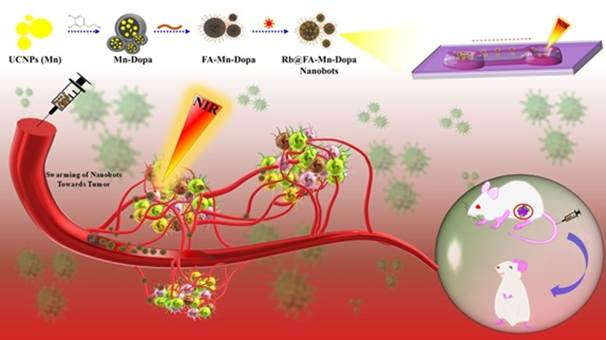
Researchers have developed innovative light-activated nanorobots that could significantly improve the treatment of breast cancer by delivering therapy directly to tumour cells with greater precision. The breakthrough technology has the potential to enhance the effectiveness of cancer treatment while reducing damage to healthy tissues and minimizing side effects associated with conventional therapies.
The nanorobots are engineered to respond to specific wavelengths of light, enabling scientists to precisely control their movement and therapeutic action. Once activated, the microscopic devices can navigate to cancerous cells and release anti-cancer drugs or generate therapeutic effects only at the targeted site, ensuring highly localized treatment.
According to the researchers, the technology combines nanotechnology, targeted drug delivery, and light-responsive materials to improve treatment accuracy. The controlled activation mechanism helps prevent premature drug release, thereby increasing the efficiency of therapy and reducing systemic toxicity.
Laboratory studies have demonstrated promising results, with the light-activated nanorobots effectively targeting and destroying breast cancer cells while sparing surrounding healthy tissue. The researchers believe the approach could pave the way for next-generation precision oncology and personalized cancer treatment.
While further pre-clinical and clinical studies are required before the technology can be used in hospitals, the development marks an important advance in nanomedicine. If successfully translated into clinical practice, light-activated nanorobots could offer a safer and more effective treatment option for breast cancer patients, improving therapeutic outcomes and quality of life.