

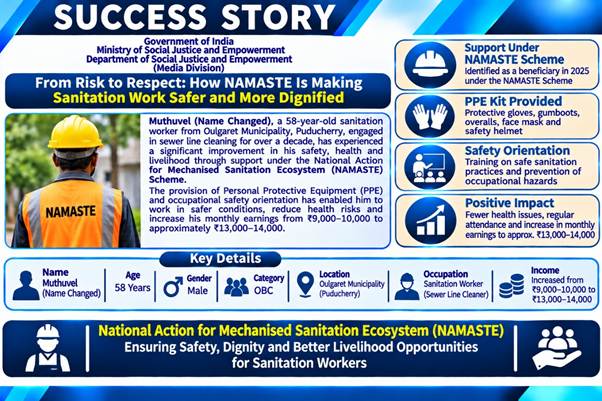
Ensuring safety, dignity and sustainable livelihood opportunities for sanitation workers is essential to building an inclusive society. The NAMASTE (National Action for Mechanised Sanitation Ecosystem) Scheme is bringing positive changes to the lives of sanitation workers by promoting safe working conditions, mechanisation and social security.
Mr. Muthuvel from Puducherry is an example of how support under the NAMASTE Scheme can help sanitation workers move towards a safer and more dignified working environment while strengthening their livelihood opportunities.
The scheme focuses on eliminating hazardous manual cleaning practices by encouraging mechanised sanitation, providing safety equipment, offering skill development and facilitating access to various welfare benefits. These interventions aim to protect workers from occupational hazards while improving their professional skills and economic security.
Through the initiative, sanitation workers are encouraged to adopt safer working practices, gain access to better livelihood opportunities and lead their lives with greater confidence and self-respect.
Mr. Muthuvel’s journey highlights the importance of recognising the contribution of sanitation workers and ensuring that their work is supported by safety, dignity and social protection.
The NAMASTE Scheme represents an important step towards creating a sanitation ecosystem where no worker has to compromise their health or dignity to earn a livelihood.