

When India reflects on its rise in para-sport, the most important number is not 111. It is the distance travelled from a sporting ecosystem that once treated disability sport as a welfare activity to one that increasingly views it as a high-performance enterprise.
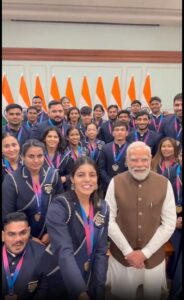
At the Hangzhou Asian Para Games, currently ongoing in October 2023, India has produced its best-ever performance at the continental level, winning 111 medals: 29 gold, 31 silver and 51 bronze, and finishing fifth overall in the medal standings. This surpassed India’s previous best of 72 medals at the 2018 Asian Para Games and marked the first time Indian para-athletes crossed the 100-medal barrier.
More significant than the tally itself was the breadth of performance. Athletics alone contributed 55 medals, while badminton, archery, shooting and chess also emerged as strong medal-producing disciplines. Indian athletes set multiple world records, including those by Sumit Antil and Sundar Singh Gurjar in javelin events.
What Worked for India?
For several decades, accessibility has remained a constant challenge for para-athletes. Many athletes have had to navigate transportation systems, public spaces and training facilities not originally designed with disability inclusion in mind. Financial barriers are equally substantial because specialized wheelchairs, prosthetics and adaptive sporting equipment are expensive.
The last few years have seen a gradual but noticeable shift. First, the talent pool has widened. The Indian contingent at Hangzhou was the country’s largest ever for the event, with more than 300 athletes participating. This reflected improved talent identification through national championships, state competitions and structured pathways that brought more athletes into the competitive system.
Second, elite performers increasingly received access to sports science, international exposure, nutrition support and specialized coaching. The results were visible in technical events such as throws, shooting and archery, where marginal gains and scientific preparation often decide medals.
Third, India’s success has benefited from a powerful “success breeds success” cycle. The achievements of para-athletes such as Avani Lekhara, Sumit Antil, Nishad Kumar and others have transformed public perceptions. Young athletes can now point to credible role models and envisage a pathway to excellence rather than merely participation.
Perhaps the most important change, however, has been cultural and psychological. For years, disability in India was often framed through sympathy. Increasingly, elite para-athletes are being viewed through the lens of achievement. Athletes increasingly enter major competitions expecting to compete for medals rather than hoping to spring occasional surprises. It has encouraged families to support sporting aspirations and made elite performance a realistic ambition.
Ecosystem responded parallelly. Now, there’s an emergence of a support structure capable of reducing some of the disadvantages earlier faced. Government funding schemes, corporate sponsorships, dedicated training camps, better media visibility and growing public recognition helped athletes focus more on performance and less on survival.