

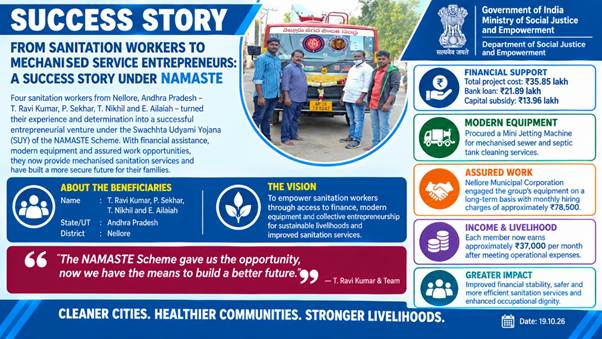
The journey from sanitation work to mechanised service entrepreneurship reflects a significant shift towards safer working conditions, sustainable livelihoods and greater economic independence for sanitation workers.
Through access to livelihood support, training and opportunities for entrepreneurship, sanitation workers can transition from traditional manual practices towards operating mechanised sanitation services. This transformation can help reduce exposure to hazardous working conditions while creating opportunities for stable income generation.
Mechanisation also plays an important role in improving the efficiency and safety of sanitation services. By adopting appropriate machines and modern equipment, sanitation workers can become service providers and entrepreneurs, contributing to cleaner communities while building sustainable livelihoods.
Initiatives supporting this transition seek to promote the dignity and well-being of sanitation workers by enabling them to explore alternative and technology-enabled livelihood opportunities. Entrepreneurship can further provide workers with greater control over their economic activities and help strengthen their financial security.
The transition from sanitation workers to mechanised service entrepreneurs represents a journey of empowerment—combining technology, skills and livelihood opportunities to create a safer and more dignified future.