

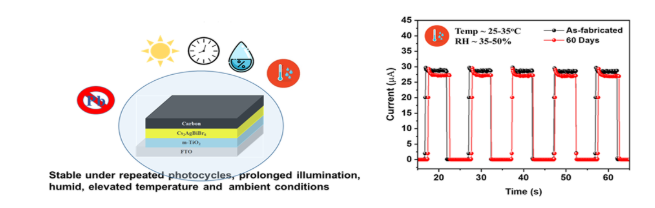
Scientists have developed a novel environment-friendly photodetector capable of operating without an external power source, a breakthrough that could significantly improve the sustainability of consumer electronic devices.
The newly developed photodetector can generate its own energy while detecting light, eliminating the need for batteries or external power supply. Researchers say the innovation has the potential to reduce electronic waste and improve the energy efficiency of widely used gadgets such as smartphones, wearable devices, and smart sensors.
The device has been designed using eco-friendly materials, making it safer for the environment compared to conventional photodetectors that often rely on toxic or non-biodegradable components. Experts believe the self-powered feature can also enhance the lifespan and reliability of electronic systems, particularly in remote or portable applications.
According to the research team, the photodetector demonstrates high sensitivity and stability, making it suitable for next-generation optoelectronic applications. The technology is expected to support the development of low-power and sustainable electronics in the future.
Scientists are now working towards improving the device performance and exploring its large-scale commercial applications.