

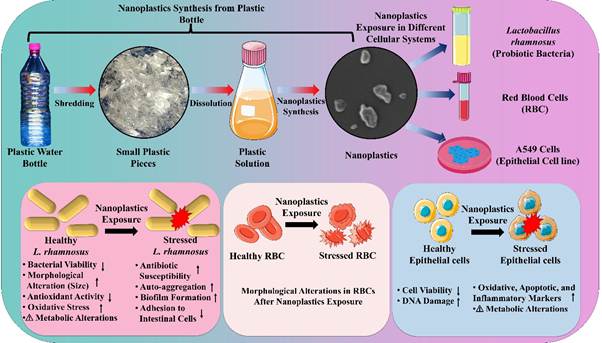
New scientific findings have raised fresh concerns over nanoplastics released from single-use PET (polyethylene terephthalate) bottles, revealing that these microscopic particles can significantly damage gut bacteria and may also pose risks to human intestinal cells.
Researchers analysing PET bottles under real-world usage conditions found that routine actions—such as squeezing, prolonged storage, temperature changes, and repeated opening—cause the plastic to shed ultra-tiny particles measuring less than 1 micrometre. These nanoplastics are small enough to cross biological barriers, making them particularly concerning.
According to the study, exposure to these particles resulted in:
- Disruption of gut microbiota, weakening beneficial bacterial populations crucial for digestion and immunity.
- Inflammatory responses in human cell cultures, suggesting possible long-term health implications.
- Increased cellular stress and reduced cell viability, indicating potential toxicity at higher concentrations.
Scientists warn that nanoplastics are more dangerous than microplastics because their size allows them to penetrate tissues, enter the bloodstream, and potentially accumulate in organs.
The findings have reignited debates over the safety of single-use plastic packaging, prompting calls for stricter regulations, improved materials, and greater public awareness. Experts say the study underscores the urgent need for sustainable alternatives to PET bottles, especially as global plastic consumption continues to rise.
The research adds to a growing body of evidence linking plastic pollution—not just in the environment, but also within the human body—to emerging health risks.