

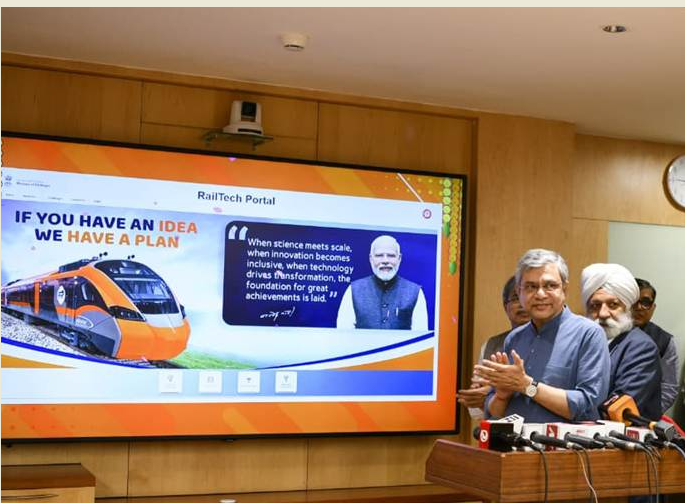
The Indian Railways on Thursday launched a dedicated Rail Tech Portal to engage innovators, startups, industry and academic institutions in developing cutting-edge solutions for the national transporter, while also announcing full digitisation of procedures in the Railway Claims Tribunal as part of its reform agenda.
Union Railways Minister unveiled the initiatives, describing them as the third and fourth reforms under the government’s “52 Reforms in 52 Weeks” programme aimed at modernising railway operations and improving citizen services.
The newly launched Rail Tech Portal will function as a single-window digital interface to facilitate collaboration between the Railways and technology developers. It will enable innovators to submit proposals online through a simplified process and support pilot projects, prototyping and scaling up of promising solutions.
Officials said the policy provides enhanced financial support for startups and innovators, including higher funding for trials and scale-up projects. The Railways may co-fund up to 50 per cent of development costs in select cases. The focus areas include artificial intelligence-based safety systems, drone-based inspections, predictive maintenance tools, sensor technologies and green energy solutions for coaches and stations.
In a parallel reform, the Railway Claims Tribunal will transition to a fully digital e-RCT system to streamline the handling of compensation claims related to accidents, untoward incidents and loss or damage of goods. With the digitisation drive, litigants will be able to file claims online round-the-clock, access case documents electronically and participate in virtual hearings. All 23 benches of the tribunal across the country are to be integrated into a unified digital platform in a phased manner.
The Ministry of Railways said the move is expected to enhance transparency, reduce delays and make the claims settlement process more accessible and efficient for citizens. The twin reforms are part of a broader push to leverage technology for operational efficiency, improved safety and citizen-centric service delivery in the rail sector, officials added.