

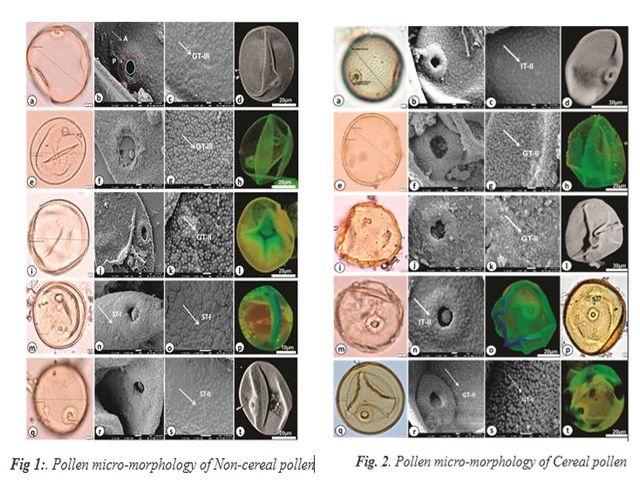
A recent scientific study has shed fresh light on the origins and evolution of agriculture in India’s fertile Ganga Plain, using an unlikely but powerful tool—microscopic grass pollen grains.
Researchers have developed a method to distinguish between pollen produced by wild grasses and that from cultivated crops, enabling them to reconstruct early farming patterns with greater accuracy. The findings help address a long-standing challenge in archaeology: identifying when and how human communities transitioned from foraging to settled agriculture in the region.
The Ganga Plain, one of the world’s most densely populated and agriculturally productive regions today, has a complex environmental and cultural history. Until now, limited evidence made it difficult to clearly trace the timeline of agricultural development. By analysing pollen preserved in sediment layers, scientists were able to detect shifts in vegetation that correspond to human cultivation activities.
The study suggests that the expansion of farming in the region may have been more gradual and regionally varied than previously believed. It also highlights the role of climate conditions and human intervention in shaping the landscape over thousands of years.
Experts say the research not only deepens understanding of India’s past but also provides insights into how ancient agricultural practices adapted to environmental changes—knowledge that could be relevant in the face of modern climate challenges.
The new approach is expected to aid further archaeological and environmental studies across South Asia, offering a more refined lens to explore the subcontinent’s agricultural heritage.