

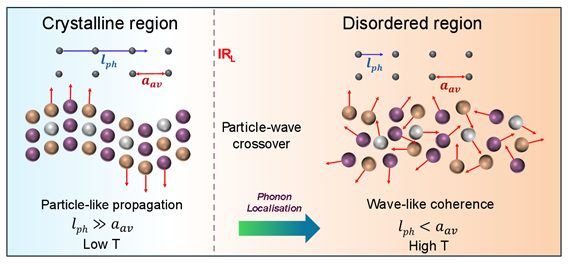
Scientists have uncovered a previously unknown mechanism of heat transport in solid materials, a breakthrough that could pave the way for ultra-efficient thermal insulators. The discovery challenges conventional understanding of how heat moves through solids and opens new possibilities for energy-saving technologies.
Traditionally, heat in solids is understood to travel through vibrations of atoms, known as phonons, and via free electrons in conductive materials. However, researchers have now identified an unusual transport pathway that alters how thermal energy propagates at the microscopic level. This mechanism significantly suppresses heat flow, making it possible to design materials with exceptionally low thermal conductivity.
The findings could have far-reaching implications for industries ranging from electronics to construction. In electronic devices, improved thermal insulation can enhance performance and extend component lifespan by preventing overheating. In buildings, advanced insulating materials could dramatically cut energy consumption for heating and cooling.
Experts believe that engineering materials based on this newly observed heat transport behavior may lead to next-generation thermal barriers, benefiting renewable energy systems, space exploration, and high-performance computing.
The breakthrough marks a major step forward in materials science, offering a promising path toward sustainable and energy-efficient technologies.