

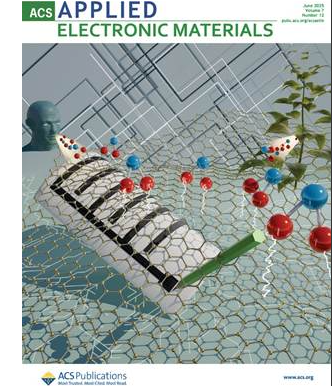
A team of researchers at Gauhati University has developed a novel, flexible, ultra-low-cost sensor using ordinary pencil graphite, paper and graphene oxide, offering promising applications in both healthcare and agriculture. The innovation addresses a key limitation of traditional sensors, which are often built on rigid substrates and rely on expensive metals and complex fabrication processes — making them costly and difficult to scale for broad use.
In the new approach, scientists led by Dr. Hemen Kumar Kalita, along with his PhD students Rajnandan Lahkar and Biswajit Dehingia, fabricated a graphene-based capacitive sensor on a simple paper substrate. They drew interdigitated electrodes directly on the paper using an ordinary pencil, while graphene oxide (GO) served as the active sensing material.
Because the electrodes are pencil-drawn and the device uses paper as its base, the sensor is lightweight, flexible and highly cost-effective. It avoids the need for costly metals, cleanroom facilities and chemically intensive manufacturing.
The research, published in the peer-reviewed journal ACS Applied Electronic Materials, demonstrates that the sensor exhibits exceptionally high sensitivity to humidity and moisture, responding with changes of more than 1,500 % at elevated humidity levels — far outperforming many existing paper-based flexible sensors.