

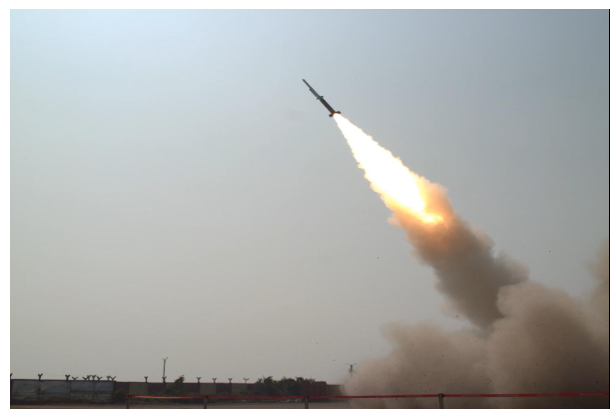
he Defence Research and Development Organisation (DRDO) has successfully carried out a demonstration of the Solid Fuel Ducted Ramjet (SFDR) technology, marking a significant milestone in India’s missile and defence technology capabilities. The test validated the performance of key subsystems of the SFDR, a propulsion system designed to power next-generation high-speed missiles. According to defence officials, the successful demonstration brings India closer to developing long-range air-to-air and surface-to-air missiles with enhanced speed, range, and manoeuvrability.
Solid Fuel Ducted Ramjet technology allows a missile to sustain high speeds over longer distances by efficiently using atmospheric oxygen for combustion. Unlike conventional rocket propulsion, the system offers better fuel efficiency and improved operational flexibility, making missiles harder to intercept.
During the demonstration, the propulsion system performed as expected, meeting critical mission objectives. Scientists said the test confirmed the reliability of the fuel system, combustion stability, and overall performance under simulated operational conditions.The SFDR programme is considered crucial for the development of advanced missile systems for the Indian Armed Forces. Once fully operational, the technology is expected to significantly enhance India’s air combat and air defence capabilities, particularly against high-speed and agile targets.
Defence experts described the achievement as a major step towards self-reliance in critical defence technologies. The successful demonstration also reflects growing indigenous expertise in complex propulsion systems, an area mastered by only a few countries worldwide. DRDO officials said further trials and refinements are planned before the technology is integrated into operational missile platforms. The development aligns with India’s broader push for indigenisation in defence manufacturing under the Atmanirbhar Bharat initiative.