

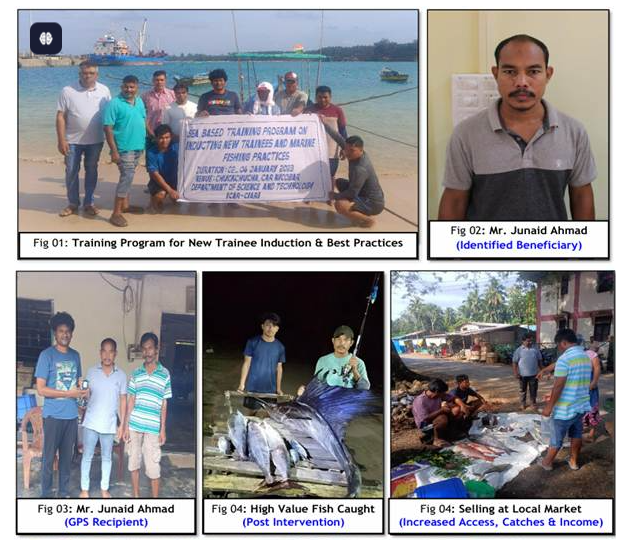
Introduction of Global Positioning System (GPS) technology has brought significant improvements to the livelihoods of fishing communities in Car Nicobar, enabling safer navigation, increased fish catch and enhanced income generation.
The initiative has been implemented by the Central Island Agricultural Research Institute (CIARI) under the Department of Science and Technology (DST) as part of its Science for Equity, Empowerment and Development (SEED) programme.
Under the programme, GPS devices have been distributed among local Nicobarese fishers along with training in navigation and modern fishing techniques. The technology enables fishermen to accurately identify productive fishing zones, optimise routes and reduce time spent at sea, thereby lowering operational risks and fuel costs.
With improved precision in locating fishing grounds, fishers have reported a noticeable rise in daily catch volumes. The enhanced productivity has contributed to better household incomes and improved nutritional security within the community.
The initiative demonstrates how appropriate technology interventions can empower remote island communities by combining traditional knowledge with modern scientific tools. It also aligns with the Government’s commitment towards inclusive development and strengthening coastal livelihoods.
The successful adoption of GPS technology in Car Nicobar is expected to serve as a model for similar interventions in other remote coastal and island regions.