

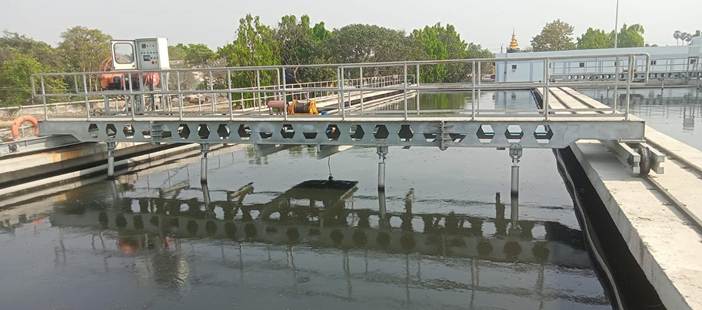
The National Mission for Clean Ganga (NMCG) has recorded significant progress in expanding sewage treatment capacity and strengthening river-cleaning infrastructure during FY 2025–26, marking a major step in the government’s river rejuvenation efforts.
During the year, NMCG added 538.03 million litres per day (MLD) of sewage treatment capacity through 18 projects spread across key Ganga basin states including Uttar Pradesh, Uttarakhand, Bihar, Jharkhand, and West Bengal.
A total of 28 sewage treatment plants (STPs) were completed in FY 2025–26, reflecting an increase over the previous year’s 22 plants and indicating accelerated project execution.
The projects involved an investment of around ₹4,700 crore, aimed at reducing pollution load and improving water quality in the Ganga and its tributaries.
Uttar Pradesh emerged as a major contributor, with key infrastructure upgrades in cities such as Varanasi, Prayagraj, Moradabad, Agra, and Vrindavan. Notably:
- A project in Varanasi added 55 MLD, the highest among all initiatives.
- Prayagraj works involving drain interception and STP augmentation created 43 MLD capacity.
- Moradabad and Shuklaganj also saw targeted pollution abatement measures.
To enhance transparency and monitoring, NMCG also introduced the Ganga Pulse Public Portal, a real-time digital platform tracking STP performance across basin states.
Overall, the FY 2025–26 achievements highlight a focused push on infrastructure delivery, capacity expansion, and technology-driven monitoring, reinforcing the broader goals of the Namami Gange programme to restore and sustain river health.