

Scientists are increasingly turning to historical and modern data from the Kodaikanal Solar Observatory (KSO) to better understand how the Sun’s magnetic activity influences satellite communication and navigation systems.
The study which identified concentration of solar activity with the exact locations of sunspot activity peaks during the solar cycle can improve the understanding of how the Sun’s magnetic dynamo operates and how it might affect space weather and terrestrial climate.
The Sun is not a static ball of fire but a dynamic, magnetically active star that undergoes regular cycles of activity roughly every 11 years. Understanding these patterns is important because solar activity directly affects Earth through space weather, influencing everything from satellite communications to power grids.
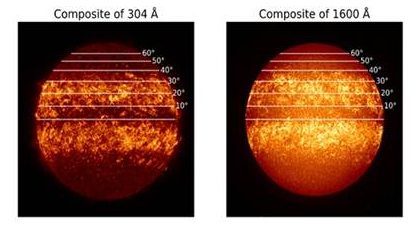
A study led by astronomers at the Indian Institute of Astrophysics (IIA), an autonomous institute of the Department of Science and Technology (DST) used calcium K line spectroscopic data of 11 years (2015-2025) from the Kodaikanal Solar Observatory which recently celebrated its 125th anniversary to map how the Sun’s magnetic activity varied with latitude.
The spectral line of singly ionized Calcium that occurs at 393.4 nm (Ca-K line) in the violet arises from the Sun’s chromosphere, above its visible surface, and is an important diagnostic of the magnetic field in this layer. The continuous daily observations of the Sun recorded by the Kodaikanal Solar Observatory, operated by IIA, is a treasure trove for researchers to analyse long term variability of various properties of the Sun.
The team used the Ca-K spectroscopic line data to monitor the magnetic activity across different solar latitude bands, and track its evolution roughly from the peak of solar cycle 24 till the peak of the current solar cycle 25.